 Go Back
GEF-UNDP-UNESCO project releases policy briefs on Central Asia’s cryosphere at RES 2026
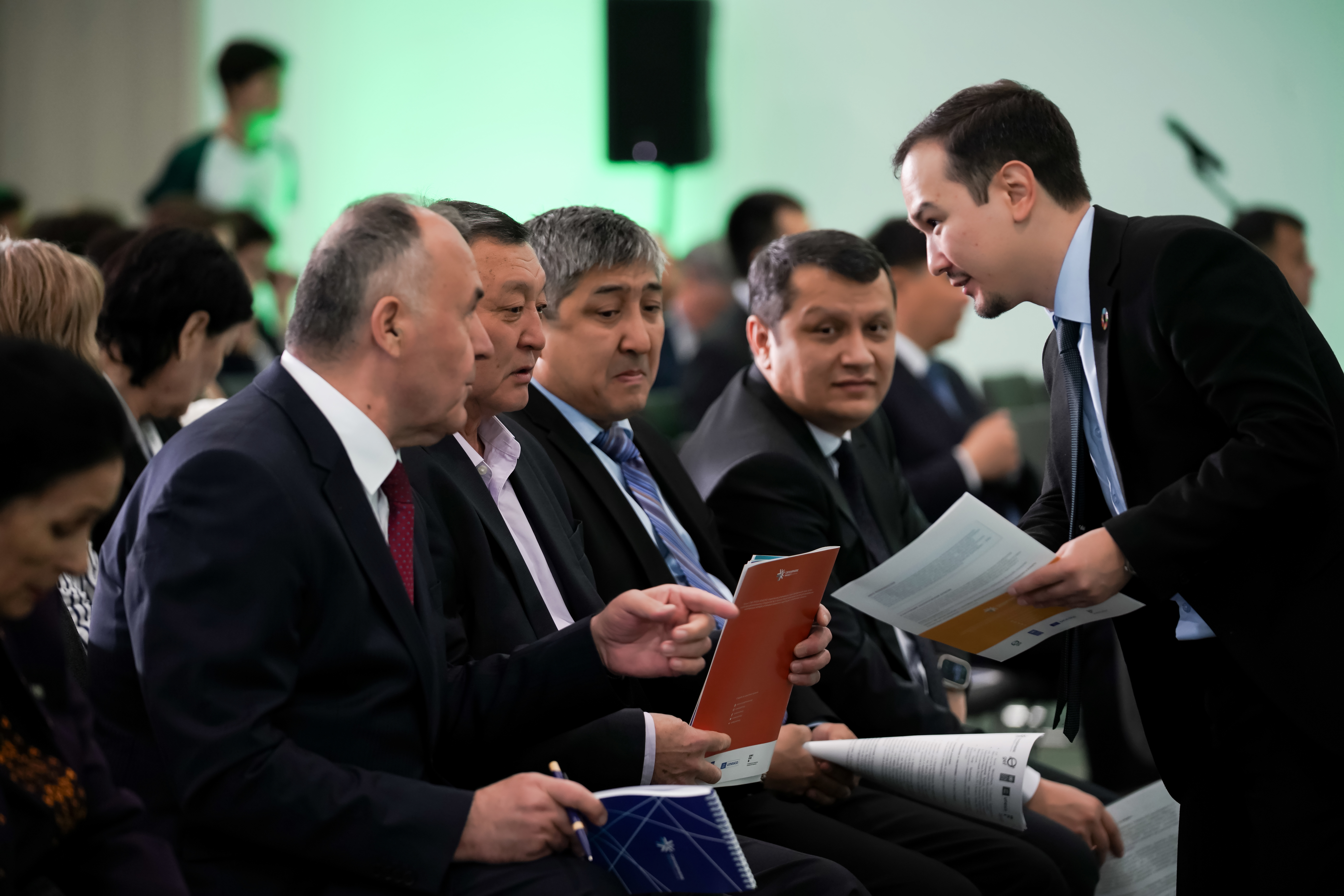
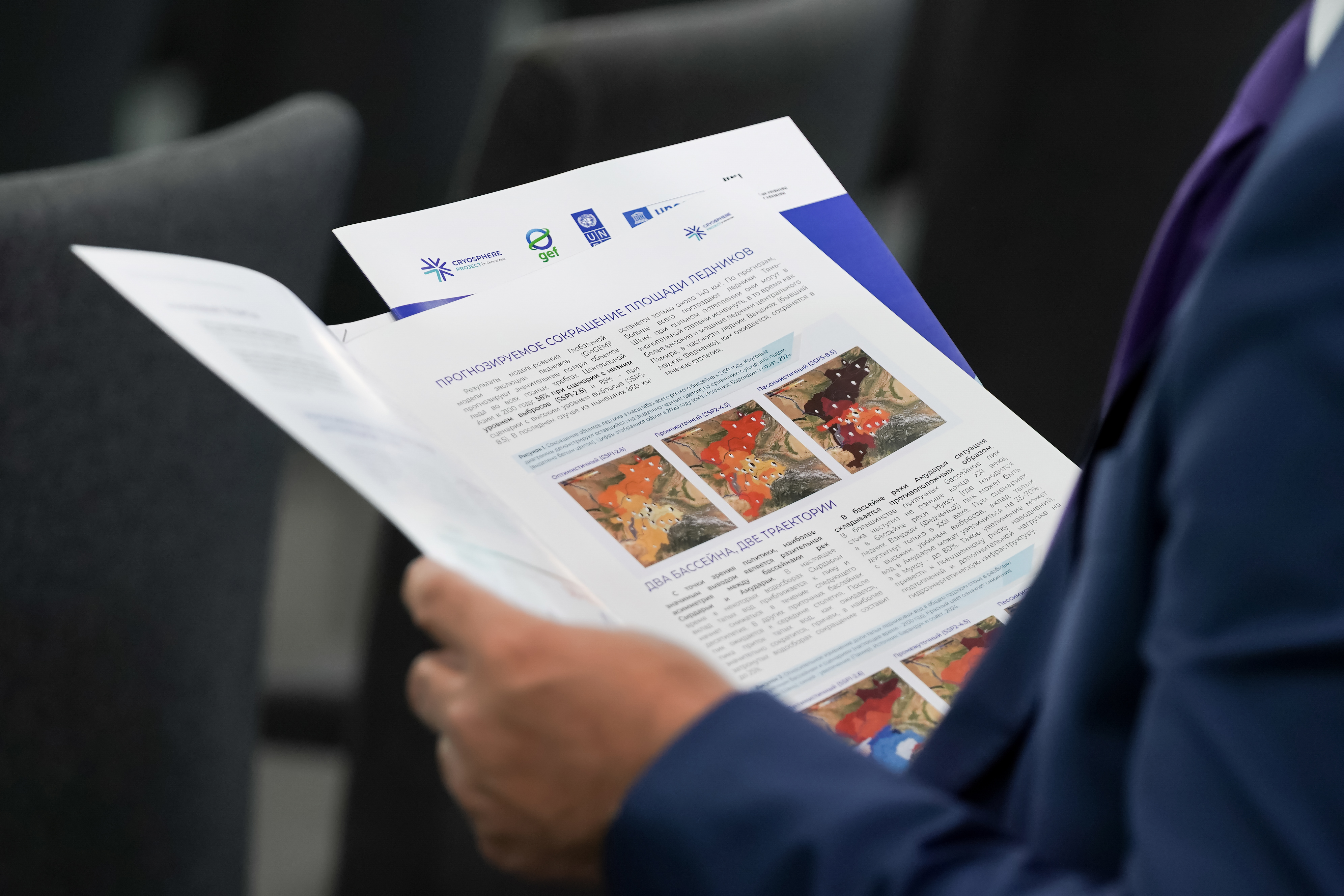
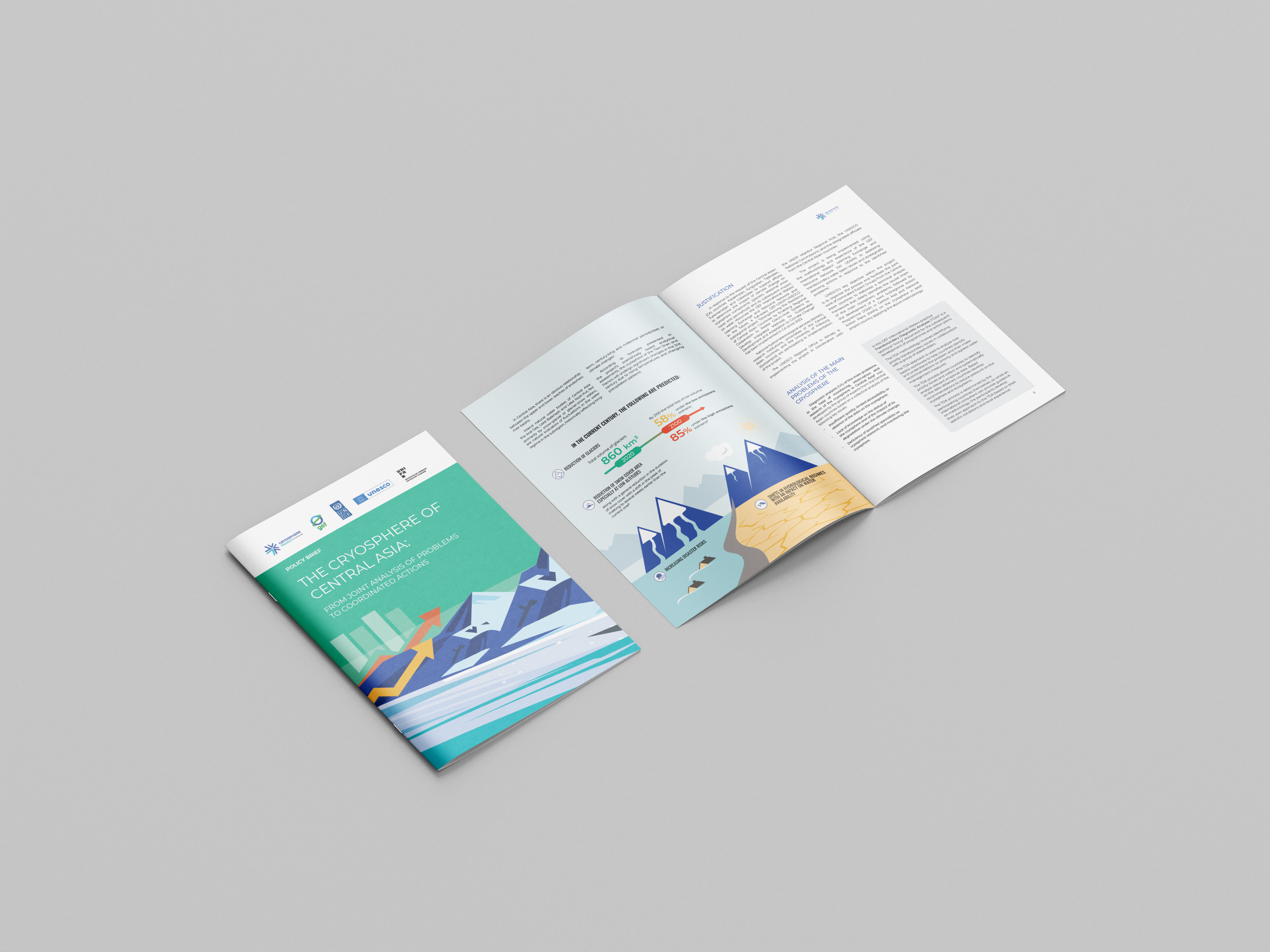
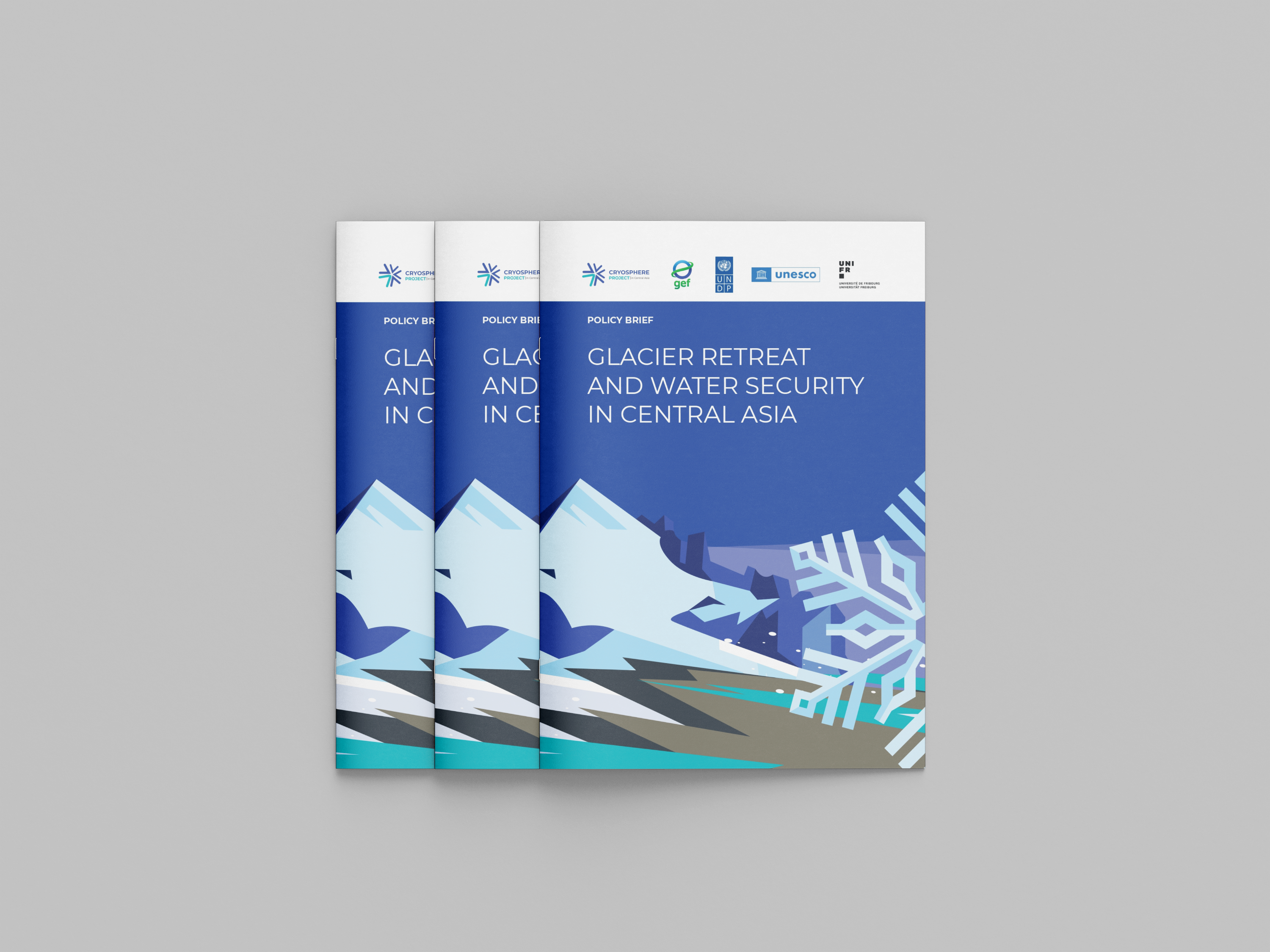
Central Asia’s cryosphere is undergoing rapid change, calling for coordinated regional action. At the Regional Ecological Summit (RES 2026) in Astana, the GEF–UNDP–UNESCO Cryosphere Project presented a set of five policy briefs addressing key priorities for the region to support decision-making and cooperation.
The briefs cover the Subregional Joint Action Programme (SJAP), climate scenarios for snow cover and glaciers, cryosphere knowledge management, and the state of higher education in cryospheric sciences. All five policy briefs are based on the Diagnostic Analysis and its annexes. The Diagnostic Analysis was developed in collaboration with national partners, the University of Fribourg, and independent experts, ensuring a strong scientific foundation and regional ownership of the findings.
Presented as one of the key knowledge products during RES 2026, the policy briefs contribute to ongoing efforts to strengthen cooperation on cryosphere monitoring, knowledge exchange, and climate adaptation in Central Asia.
The policy briefs are available for download below.