 Go Back
National workshop in Tajikistan strengthens glacier monitoring capacity
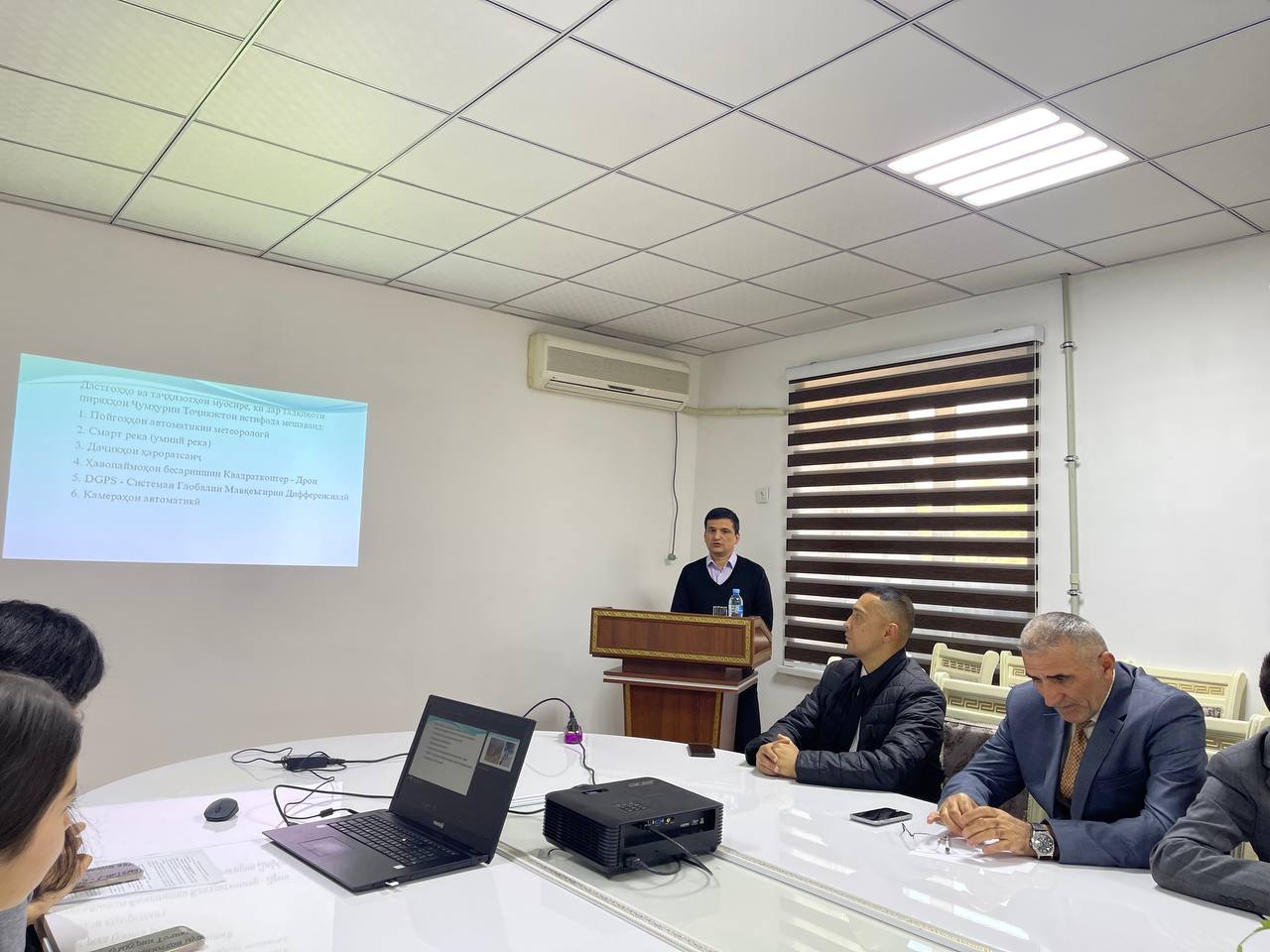
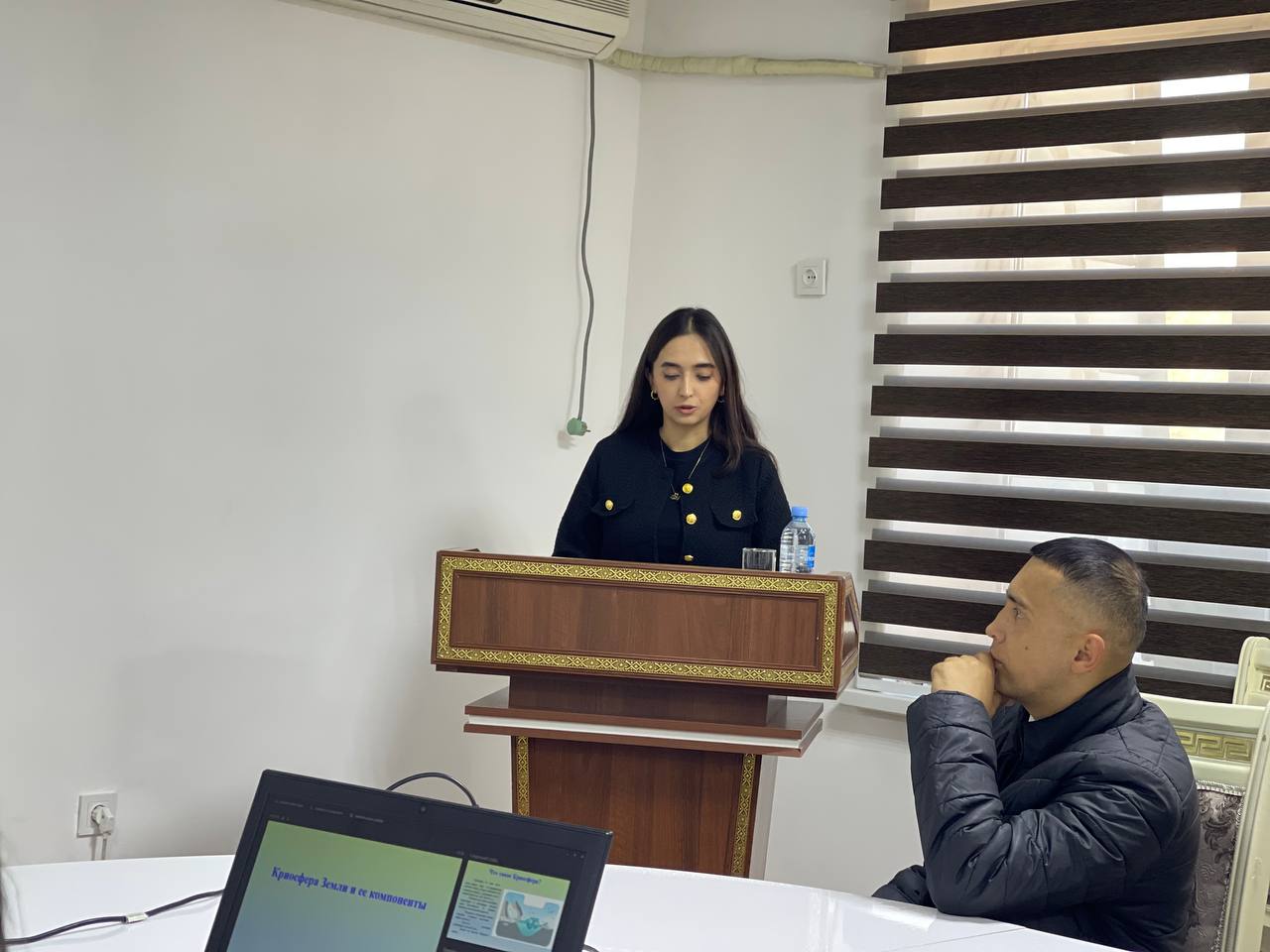
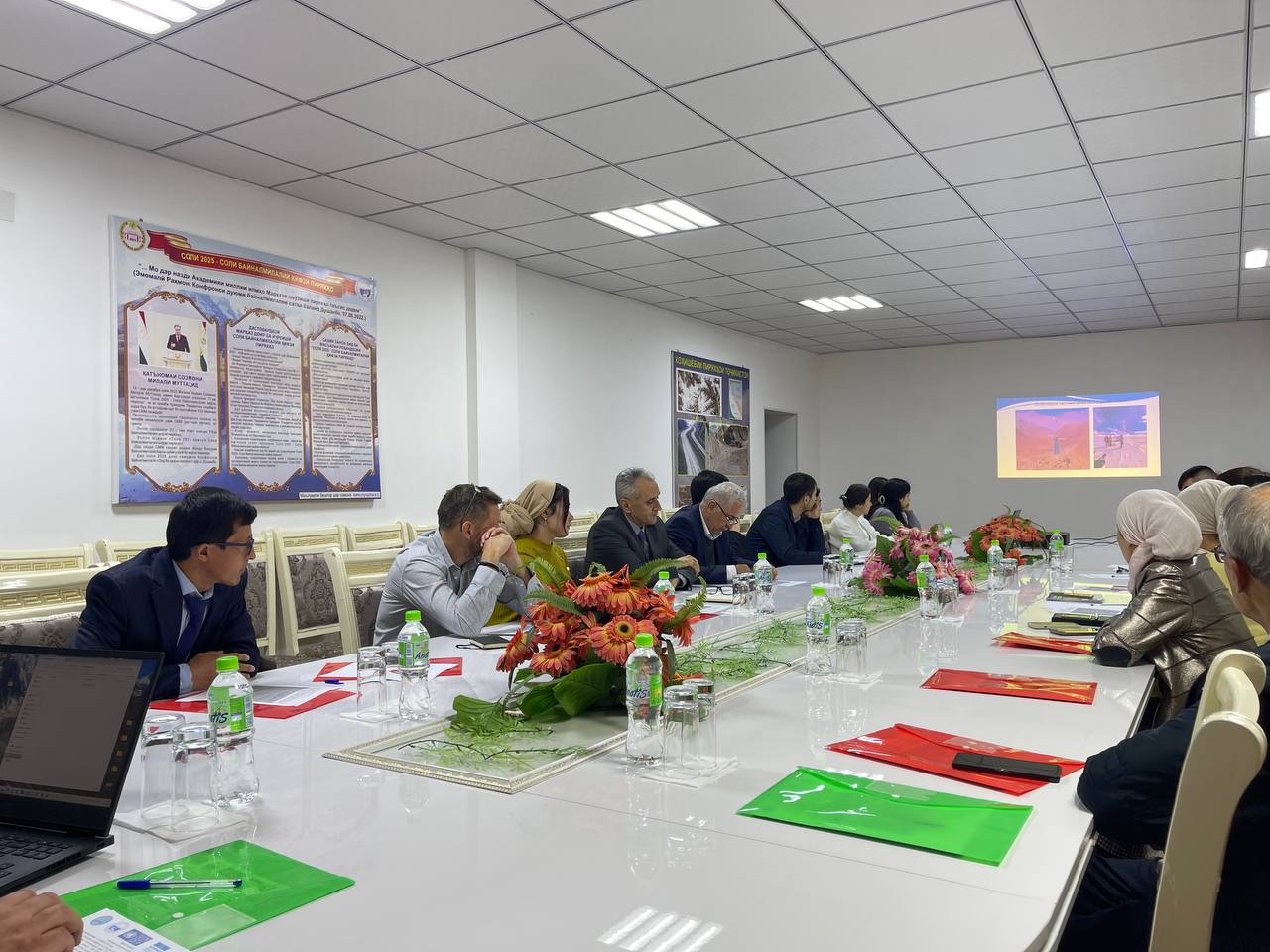
On 11 November 2025, a national training workshop on the cryosphere module was held in Dushanbe under the GEF–UNDP–UNESCO regional cryosphere project. The event brought together 23 representatives of scientific and educational institutions, including Tajik National University, the S. Ayni Pedagogical University, the Institute of Water Problems, Hydropower and Ecology of the National Academy of Sciences of Tajikistan (NAT), as well as specialists from the Centre for Glacier Studies of NAT and the Agency for Hydrometeorology.
Participants discussed the current state of Tajikistan’s cryosphere and exchanged experience on glacier monitoring methods. The workshop presented modern tools used in glaciological research, including mass-balance measurements, smart stakes, thermistors and unmanned aerial vehicles, as well as approaches to monitoring pulsating glaciers. The key role of glaciers in forming the country’s water resources and the need to further strengthen the national observation system were highlighted. Special attention was given to capacity development and engaging young specialists in cryosphere research.
Eight women – students and young researchers from leading academic and scientific institutions – took part in the workshop. Participants noted growing interest among women in cryosphere sciences: more than 15 students at the Pedagogical University study geography, while six students at Tajik National University specialise in hydrology and glaciology. The Centre for Glacier Studies proposed expanding opportunities for young women to engage in its activities, including participation in the Association of Women Studying Glaciers and access to practical training and internships.
The workshop was part of a set of activities implemented in 2025, including field research on the Yakarcha, Zulmart, No. 457 and Nusay glaciers, and the strengthening of the technical base of the Centre for Glacier Studies. These efforts contribute to improving the quality of scientific data and building national capacity in cryosphere research.
Participants agreed to continue this work and hold an expanded cryosphere module workshop with a wider group of stakeholders in February 2026.
The event was held under the regional GEF–UNDP–UNESCO project Strengthening the Resilience of Central Asian Countries by Enabling Regional Cooperation to Assess Glacio-Nival Systems to Develop Integrated Methods for Sustainable Development and Adaptation to Climate Change, implemented by the UNESCO Regional Office in Almaty with financial support from the Global Environment Facility through the United Nations Development Programme.